Tuesday, April 30, 2013

Yankee ingenuity provides constant upward force to our economy. One example is the new smart phone applications that bring your doctor to your bedside. This "lab in a chip" allows him/her to diagnose you remotely.

http://www.youtube.com/watch_popup?v=r13uYs7jglg

We may in in a narrow trading range for awhile, so prepare to buy on the dips.

Monday, April 15, 2013

The flatter yield curve and wider credit spreads suggested a dip in the stock market. We certainly have seen that during the last couple of days.

As usual, investors are throwing the baby out with the bath water. All thirty of the Dow Industrials fell today. There are usually some good stocks on this list that deserve your attention under these circumstances. http://money.cnn.com/data/dow30/


Friday, April 05, 2013

Another cautionary tale for the equity market. People have to have jobs in order to buy stocks. Not enough of our employment-aged workers are in the work force. The labor force participation rate is the lowest since the Carter administration! The Bureau of Labor Statistics just provided this graph.
source data at BLS website:
http://data.bls.gov/generated_files/graphics/latest_numbers_LNS11300000_1984_2013_all_period_M03_data.gif/

Thursday, April 04, 2013

Equities usually deliver an average return of 10% per year. When investors get that much during the first quarter, as they did last year and again this year, they often lock in those gains and sit on the sidelines. The flatter yield curve and wider credit spreads suggest that this is happening now.


This is a good time to reduce the risk in portfolios.

Wednesday, March 06, 2013

Money is changing hands at an historically slow rate.

The velocity of money, called M2V, is the lowest  it has been since 1958. The red line on this graph from the Federal Reserve of St. Louis is my own definition of low velocity. Data below that mark appears to be sluggish movement of each dollar through our economy.
The stock market may have made a new high, but this low velocity suggests that we are a long way from a recession that would cause a market decline. Chart source: http://research.stlouisfed.org/fred2/series/M2V/

Thursday, February 28, 2013

Our strengthening economy may trump the sequester.

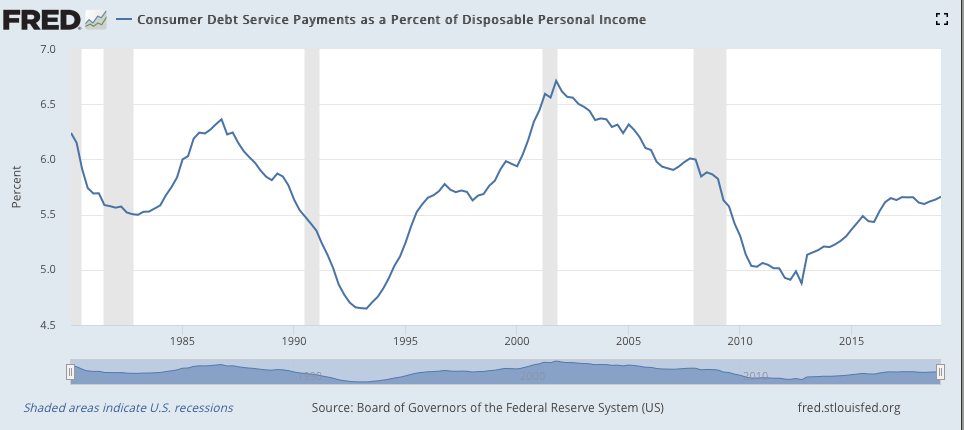
Consumers may have finished deleveraging; debt levels increased during the fourth quarter of last year. You can see more on the NY Fed's blog that is named after its address, Liberty Street. http://goo.gl/DEKL8
If, indeed, consumers have the confidence to take on more debt, perhaps this housing rebound will continue to be the third leg of the stool that supports this economic expansion. Economic expansions tend to support stock market expansions as well.

Tuesday, February 05, 2013

The economy suffered when the government cut defense spending last year. Now investors assume that Congress will avoid further drastic cuts that could cause even more damage. President Obama's speech this afternoon may give equity investors confidence.

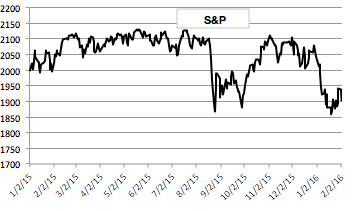
Last week, the fixed-income market's quality spreads forecast a minor correction. Now the bond market suggests that the correction is over, and the equity rally may be back on track. Here is a graph of the S&P for one week.
Stay invested in equities, but don't relax. January's outsized gains cannot continue all year.

Thursday, January 31, 2013

The Bureau of Economic Analysis released an estimate of fourth quarter growth yesterday. http://www.bea.gov/newsreleases/national/gdp/2013/pdf/gdp4q12_adv_fax.pdf

The number was negative.

Negative growth has frightened fixed-income investors. They are moving back into higher quality securities. Treasury prices are increasing, the curve is flatter, and quality spreads are wider.

It may be time to reduce risk in your portfolio.

Wednesday, January 30, 2013

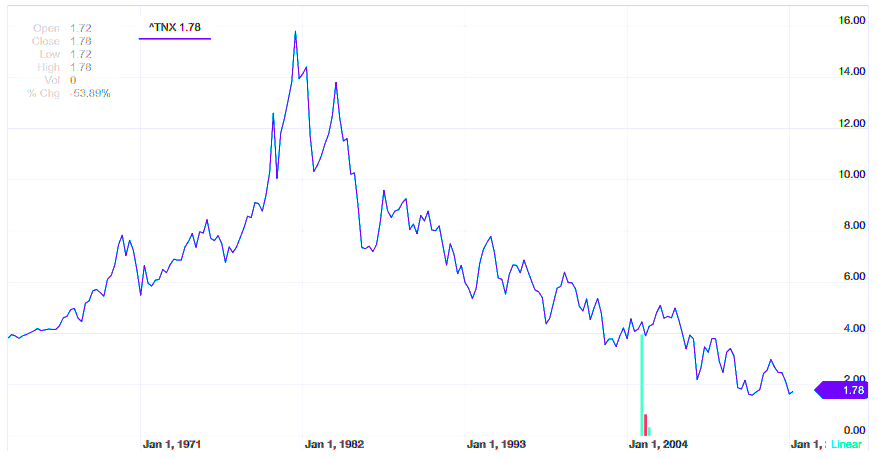
For the last six months, investors have been fleeing the ten-year note in favor of other assets. Much of that change has occured this month as indicated by the following graph.
Some of the cash went into equities. Some may have gone into hard assets such as real estate and gold. In any case, investors are redeploying money from Treasuries.

Thursday, January 03, 2013

New Benchmark

The Wall St. Journal website no longer publishes the Merrill Lynch High Yield Index as regularly as it did in the past.

This index is important because it measures changes in investors' risk tolerance. This is the difference between the yield on lower quality bonds and safer US treasuries. As investors take on more risk, this spread becomes smaller. The fixed-income market often moves ahead of equities, so you may get advance notice of movements in the S&P.

You may want a simple tool from the Federal Reserve Bank in St. Louis:
http://research.stlouisfed.org/fred2/series/BAMLH0A0HYM2


Select the option "Last five observations" to see the spreads you need. Today's data shows the spread narrowing from 5.31% to 5.16% as investors take on more risk.
2013-01-02: 5.16 Percent
2012-12-31: 5.31
2012-12-28: 5.30
2012-12-27: 5.28
2012-12-26: 5.24
Daily, Close, Not Seasonally Adjusted, Updated: 2013-01-03 9:28 AM CST

The Fed can deliver this information to your inbox every morning - at no charge. Just select "Notify Me" at the options on the left of the page.